
Myanmar’s military‑backed government has rejected the ASEAN special envoy for the country, saying the role is no longer needed after a contested election that placed junta chief Min Aung Hlaing in the presidency.
ASEAN’s envoy dismissed amid strained ties
In a statement released by Myanmar’s foreign ministry over the weekend, officials declared that the appointment of the new special envoy of the ASEAN chair “is no longer necessary.” The comment follows the leader’s recent trip to Thailand, where officials have urged a return to full participation in the regional bloc.
Relations between Myanmar and the 11‑member Association of Southeast Asian Nations have been tense since the military seized power in February 2021, ousting the elected government of Aung San Suu Kyi. The coup sparked a civil war that has killed an estimated 100,000 people and displaced millions.
Since then, the leadership has been barred from top‑level ASEAN meetings for failing to implement the “five‑point consensus” peace plan agreed with the bloc. The recent dismissal of the envoy highlights the growing divide.
Election controversy and political transition
The December‑January election, widely criticized for the absence of meaningful opposition, resulted in a victory for a military‑backed party. That win allowed Min Aung Hlaing to assume the presidency, consolidating the military’s grip on power.
Thai Foreign Minister Sihasak Phuangketkeow, after meeting the junta chief in Bangkok, said Thailand seeks peace and stability in Myanmar as part of the ASEAN peace plan and is not abandoning regional concerns. Nonetheless, the pro‑military parliament passed a motion last month rejecting the ASEAN plan, branding it interference and urging a reassessment of the bloc’s stance.
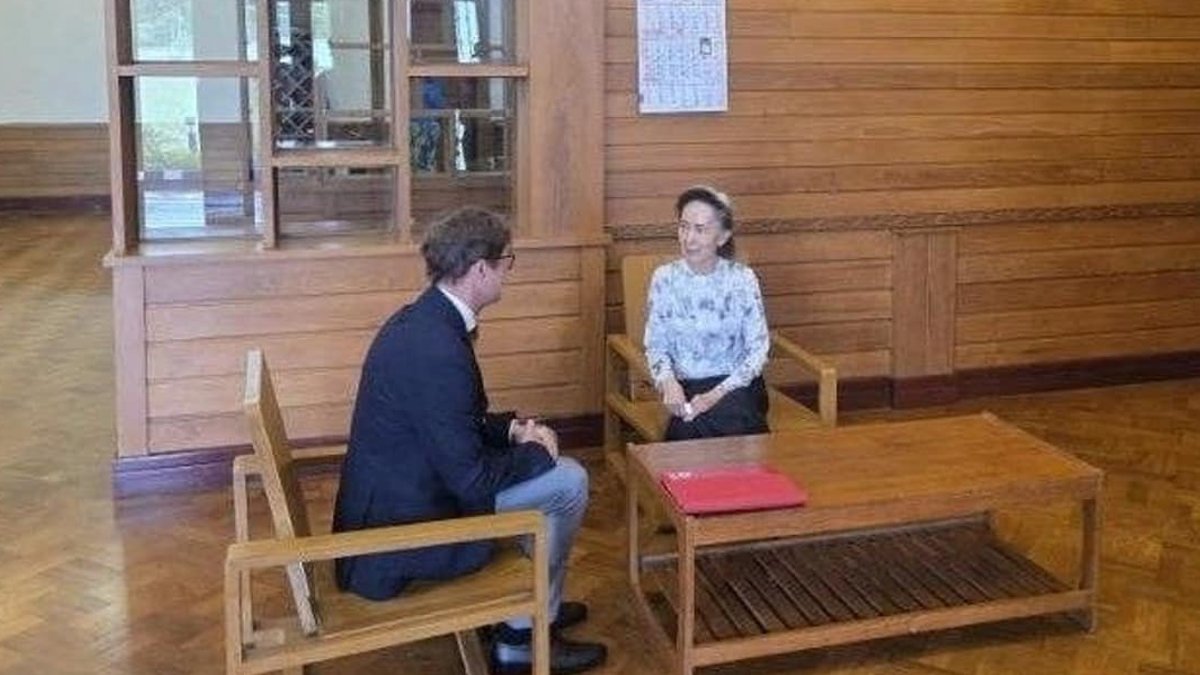
ASEAN’s own statement on Friday highlighted a recent meeting between Suu Kyi and an International Committee of the Red Cross official, noting that no foreign leader or envoy had previously met the Nobel laureate.
Related: Indo-MIM IPO sees strong demand on second day
The bloc reiterated its call for the current ASEAN envoy—the Philippine foreign minister—to meet with Suu Kyi and demanded her unconditional release along with other political prisoners.
Suu Kyi, now 81, is serving an 18‑year sentence for offenses she denies committing. The foreign ministry responded that while her sentences have been commuted for humanitarian reasons, a full and unconditional release “shall only be carried out in accordance with the law.”
For ordinary citizens caught in the conflict, the continued denial of a diplomatic channel means fewer opportunities for dialogue that could ease daily hardships. Families displaced by fighting remain dependent on limited humanitarian aid, and the lack of a clear path toward political reconciliation heightens uncertainty about their future.
Regional implications and next steps
Thailand’s recent talks with Min Aung Hlaing suggest a willingness among some ASEAN members to engage the junta directly, hoping to bring Myanmar back into the regional bloc’s fold.
Yet the rejection of the envoy signals resistance to external pressure.
ASEAN officials have not indicated whether they will replace the dismissed envoy or pursue a different approach. The bloc’s ability to influence the situation will likely depend on whether member states can present a united front.
International observers note that the ongoing civil war, the humanitarian crisis, and the stalled peace process keep Myanmar at the center of regional security concerns. The next phase of ASEAN‑Myanmar interaction remains uncertain, with the junta’s stance on the envoy marking a notable setback for diplomatic efforts.


