


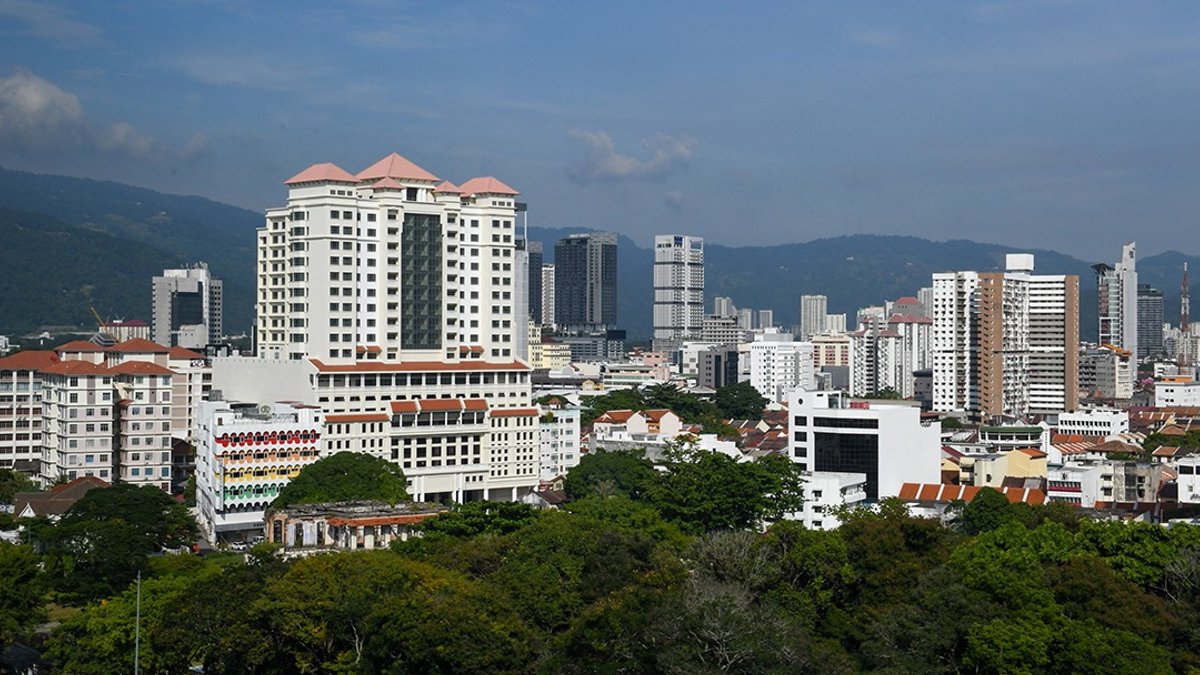
Penang residential market showed steady demand in the second quarter of 2026, buoyed by a robust manufacturing sector that continues to generate housing needs, according to Saleha Yusoff, executive director of Nawawi Tie Leung Property Consultants.
Industrial Growth Fuels Housing Demand
Yoff noted that the state’s semiconductor ecosystem and ongoing high-value industry investments helped keep the market relatively stable.
She added that performance varied across segments, with industrial assets maintaining stronger fundamentals while home seekers grew more price-sensitive.
Expansion in manufacturing hubs around Bayan Lepas, Batu Kawan, Valdor and parts of Seberang Perai has lifted demand for nearby dwellings.
Purchasers are taking longer to compare projects, locations and costs, making affordability a decisive factor.
The secondary market in mature neighborhoods benefited from limited supply, whereas high-rise blocks faced heightened competition from both existing and upcoming units.
Developers responded by tightening launch plans, adjusting product positioning and revising pricing strategies.
Infrastructure upgrades, such as the Mutiara LRT line and the Penang International Airport expansion, are expected to enhance connectivity and support long-term growth in tourism and business travel.
Understanding the link between industrial employment and housing demand clarifies why regions with factories often see steadier home activity; jobs create a predictable pool of occupants who need nearby accommodation.
Price Trends Across Sectors
Landed home values on the island remained flat quarter-on-quarter, with only modest year-on-year shifts.
Terraced houses in Island Glades, Jelutong/Greenland, held their price and rose 7% year-on-year to RM800 per square foot.
Read Also: Malaysian hospital performs record robotic heart surgeries
Scarcity of new landed supply in the Jelutong-Green Lane corridor, coupled with established amenities, continues to support these figures.
In Island Park, semi-detached units slipped 2% quarter-on-quarter to RM530 per square foot, reflecting buyer-seller negotiations rather than a market downturn.
Terraced homes at Tree Residency in Bayan Lepas posted a 5% year-on-year rise, reaching RM1,000 per square foot, driven by limited transaction volume.
On the mainland, landed prices stayed unchanged quarter-on-quarter, while semi-detached units in Bandar Putra Bernam climbed 4% year-on-year to RM240 per square foot.
Yoff explained that ongoing industrial development around Bertam fuels employment, which in turn sustains housing demand for both owner-occupiers and commuters.
Lower entry prices on the mainland also make it an attractive option for first-time purchasers compared with island listings.
High-rise projects recorded no quarter-on-quarter price movement, though select schemes showed slight year-on-year gains; Middleton rose 4% to RM830 per square foot.
Miami Green in Pantai Miami maintained a steady value, thanks to its affordable positioning for a sea-view high-rise, with prices around RM460 per square foot.
Meanwhile, high-rise developments across the island and mainland showed flat price movement for the quarter, with only a handful of projects registering modest year-on-year gains. The monitor highlighted that Middleton posted a slight increase, while Miami Green kept its value stable, reflecting limited upward pressure in the condominium segment.
Location-Driven Demand Factors
Despite unchanged pricing, Utropolis Utama maintained steady interest, according to the monitor. Its setting within the expanding Batu Kawan corridor, surrounded by educational institutions, industrial parks and commercial centres, was cited as a core driver of ongoing demand, even without a price rise.


