


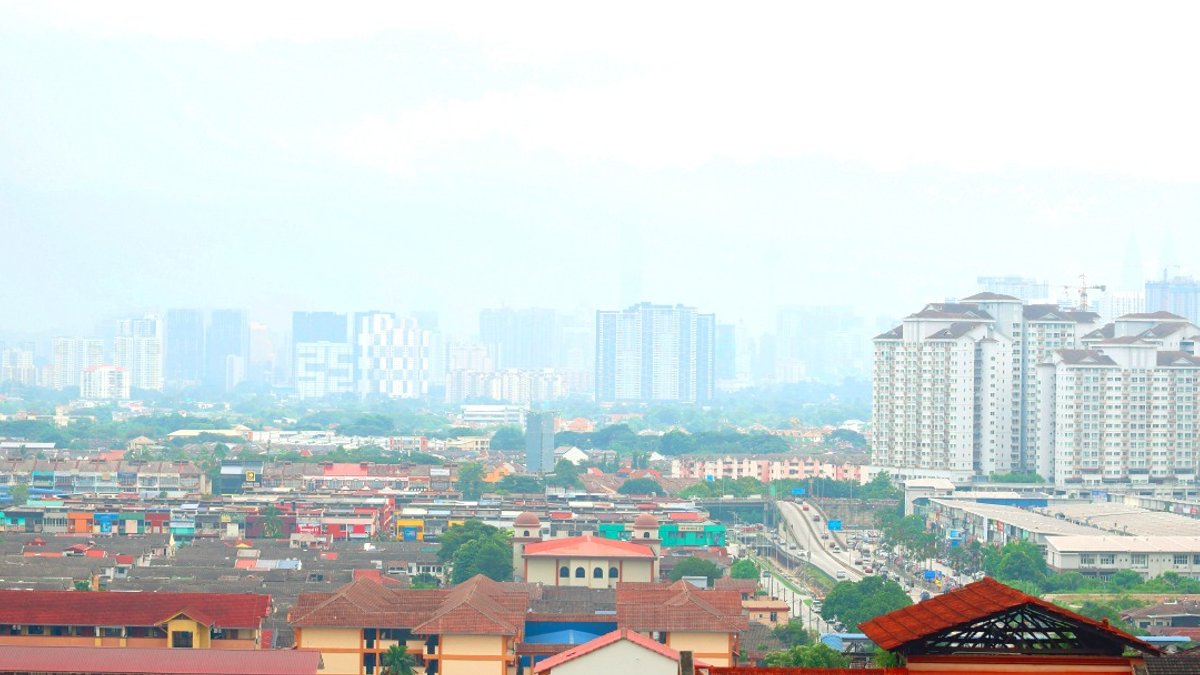
The East Coast Rail Link (ECRL) is poised to bring renewed attention to Gombak, potentially marking a turning point for the area’s commercial potential and property market. The 525km rail project, with Phase 1 98.16% complete, is expected to commence operations in mid-December. It will connect Gombak to Kota Bharu via 16 stations across Selangor, Pahang, Terengganu, and Kelantan, significantly enhancing regional connectivity.
Gombak’s Strategic Location and Character
Gombak’s boundaries stretch from the Batu Caves area in the north to Setapak in the south, with the Gombak River corridor forming its western edge and the Klang Gates Quartz Ridge its eastern. The area is anchored by Jalan Gombak and includes established neighbourhoods like Taman Sri Gombak, Greenwood, Kampung Tengah, Gombak Setia, Taman Gombak Permai, and Taman Selaseh. Administratively, most of Gombak falls under the Selayang Municipal Council (MPS), though some areas are managed by the Ampang Jaya Municipal Council (MPAJ) and Kuala Lumpur City Hall (DBKL).
Gombak serves as a vital overflow area for Kuala Lumpur’s population, having transformed from traditional villages to a residential and commercial hub with a mix of old and new developments, catering to professionals working in central Kuala Lumpur, Setapak, Wangsa Maju, and nearby industrial zones. The area’s semi-urban character is defined by its blend of landed estates from the 1980s and 1990s and modern high-rise developments. As a commuter belt, it provides a practical solution for those working in the city.
The Impact of Major Infrastructure Projects
The most significant catalyst for Gombak’s recent development has been the completion of the Gombak Integrated Transport Terminal (GITT). This 24-hour multi-modal hub links the LRT Gombak station to the ECRL Gombak station, transforming the area into the primary interchange for travellers from the east coast to Kuala Lumpur. The GITT is expected to dramatically increase footfall and create demand for hospitality, retail, and short-term accommodation services.
Read Also: Weaker euro lifts exporters in earnings season
Improved rail connectivity is expected to strengthen long-term residential demand, particularly for properties near transit nodes, and support sustainable value growth, adds Mohamad Alhafiz Farouk, executive director of Landserve Sdn Bhd. The implementation of the MRT3 Circle Line and upgrades to the MRR2 corridor are set to further enhance Gombak’s connectivity, potentially triggering a rerating of local property values.
The Gombak property market has shown stable performance over the past five to 10 years, driven by fundamental demand rather than speculation, according to Alhafiz. He notes that “transaction volumes have remained generally consistent throughout this period, with steady interest in affordable landed homes and stratified residential units.” Alhafiz adds that “demand has been largely owner-occupier-led, comprising first-time buyers and families seeking reasonably priced housing in established neighbourhoods,” which has helped maintain market stability.
As a sample reference, he points to the prices of single-storey terraced houses with a land area of about 700 to 800 sq ft in Sri Gombak, which increased from about RM350,000 to RM400,000 in 2016 to about RM450,000 to RM500,000 in 2026. Based on these figures, the estimated compound annual growth rate has been 2.5% to 3.6% per annum over the past decade. In the commercial segment, the three-storey shop units in Prima Sri Gombak recorded prices of up to RM4.55 million in 2025, up from RM2.9 million in 2023.
Retail and Commercial Activity
Current commercial activity in Gombak remains largely neighbourhood-focused, catering to the daily needs of residents. Established commercial strips along main roads maintain steady occupancy rates of 70% to 85%, particularly those providing essential services like automotive businesses and F&B outlets. This localised demand forms the backbone of the commercial sector. A key exception is the KL East Mall, which has maintained robust footfall since opening. It serves as a lifestyle anchor with a high retail occupancy rate of 100%, successfully attracting both local residents and visitors from neighbouring areas. The mall’s success highlights the potential for modern retail offerings to complement the traditional commercial fabric of Gombak.
Read Also: Malaysia train stations lack pedestrian infrastructure
The rental market in Gombak has maintained a stable performance over the past five years, with landed residential properties showing a flattish trend, while commercial properties like serviced apartments and shopoffices have experienced a marginal increase. Alhafiz says “rental levels are generally stable and affordable, with the median monthly rent typically in the range of RM1,400 to RM1,500 for standard residential units.” He notes that the market is characterized by consistent occupancy rather than aggressive rental growth, making it a practical housing alternative to more expensive areas in KL.
In terms of occupancy, landed housing schemes exhibit higher rates of owner-occupiers, often exceeding 80%, while newer condominiums and apartments show higher rates of tenants, sometimes exceeding 50%, says Long. The pandemic has also influenced property use preferences, leading to increased demand for units offering home office space and developments with full digital infrastructure. Commercial property use has diversified beyond traditional retail to include F&B, professional services, and flexible workspace concepts, adapting to the evolving needs of tenants and businesses.
New Developments Reshaping Gombak’s Environment
New developments include Aisya @ KL East, a transit-oriented development located opposite the Gombak LRT Station, GITT, and the ECRL Gombak Station, with completion expected in 2027. Another project is Residensi MH Platinum 3, a high-rise residential development comprising 1,688 units in two 42-storey towers in Jalan Gombak, Setapak. There is also Residensi Flora Hijauan in Taman Melati, a Rumah Selangorku scheme comprising 1,677 units of affordable homes.
Apart from these, Permata Heights by CPI Land Sdn Bhd in Taman Bukit Permata is a freehold development comprising 177 homes, including super-link houses, semi-detached units, and bungalows. Prices at its first phase, Permata Gemma, start from RM1.76 million. Residensi Hektar Gombak, an affordable housing project with 2,400 units, is undergoing restoration and is expected to be completed by 2027.


