


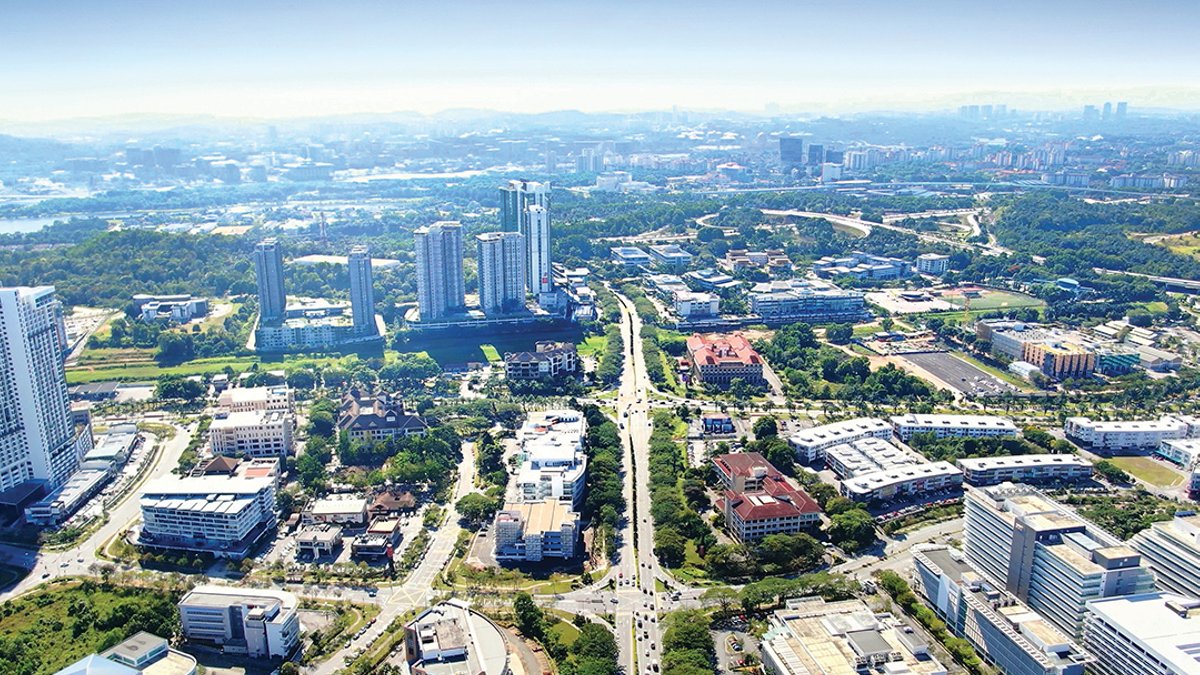
A drilling machine broke ground on a hill outside Sepang in May 1997, launching the Multimedia Super Corridor (MSC) initiative. The Malaysian government had just committed to technology development at a time when fewer than three out of every hundred Malaysians had internet access. Seven weeks later, the Asian financial crisis hit, and within two years, Businessweek would label the MSC a failure. Despite this, Cyberjaya persisted as a project.
Today, Cyberjaya functions as one of Malaysia’s largest technology hubs, housing companies, agencies, and institutions that drive the nation’s digital economy. The early challenges—financial instability, skepticism, and slow adoption—contributed to its resilience. Selangor, the state where Cyberjaya is located, has grown alongside it, establishing the city as a key part of its economic strategy.
Selangor’s economy expanded by 6.3% in 2025, reaching RM460.1 billion, and now represents 26.5% of Malaysia’s gross domestic product—more than 1.7 times the size of Kuala Lumpur’s economy. The state remains a manufacturing leader, accounting for a third of the country’s industrial output, and aims to become the first Malaysian state to reach a RM500 billion economy, with a RM600 billion target by 2030.
The digital sector plays a central role in this growth. Under the Second Selangor Plan (RS-2), technology is one of five priority areas, supported by the state’s Digital Future Action Plan. In the first half of 2026, Selangor attracted RM70 billion in approved investments, with artificial intelligence, cloud computing, cybersecurity, and data analytics leading the way. According to Malaysia Digital Economy Corporation (MDEC) data, Selangor and Kuala Lumpur together accounted for 88% of Malaysia’s approved digital investments in the third quarter of 2025.
Related Post: Malaysia leads US-backed Southeast Asia data cable project
Cyberjaya’s Role as Malaysia’s Digital Testing Ground
Cyberjaya embodies Selangor’s digital ambitions through its physical infrastructure. The city operates as a Living Lab, where new technologies are tested in real-world conditions before being expanded across the state and nation. Futurise, a subsidiary of Cyberview, manages the National Regulatory Sandbox, facilitating collaboration between regulators and innovators. Since 2020, Cyberjaya has hosted Malaysia’s first public-road testing route for autonomous vehicles, now covering 22 kilometers. In July, it launched the country’s first remote operations center for autonomous logistics vehicles, developed in partnership with the Selangor Information Technology and Digital Economy Corporation (Sidec).
The city’s digital infrastructure continues to attract data centers and technology investments. The foundation established in 1997 now supports Selangor’s focus on artificial intelligence, data sovereignty, and next-generation services, areas where Cyberjaya’s experience provides a competitive advantage.
Cyberview, the company responsible for developing Cyberjaya under the ownership of the Minister of Finance Incorporated, has shifted from land management to technology hub development. Its responsibilities include attracting foreign and domestic investment, constructing facilities, ensuring digital infrastructure is available, and shaping Cyberjaya into a location where professionals can build careers and communities.
Cyberjaya now has a population exceeding 100,000, including residents and students. It includes 17 schools and universities, 480 MD Status companies, and 22 government agencies, alongside healthcare services, lifestyle amenities, and extensive electric vehicle charging infrastructure. Since 2013, the Cyberview Living Lab® Accelerator (CLLA) has supported 177 startups, which have raised over RM285 million, generated RM891 million in cumulative revenue, and created more than 1,800 jobs. The program serves as a critical platform for startups transitioning from validation to commercialization.
Read Also: Mega Fortris shareholders probe March trades
Semiconductors: Selangor’s Next High-Tech Frontier
The next phase involves semiconductors. Malaysia Semiconductor IC Design Park 2 and the Advanced Semiconductor Academy of Malaysia are now based in Cyberjaya, reflecting a national effort to strengthen the country’s role in integrated circuit design. Selangor is implementing this strategy by positioning itself as a hub for deep-tech talent and supply chain resilience amid global uncertainties.
By 2050, the goal is for Malaysians to recognize technology designed, tested, and built in Cyberjaya, a fulfillment of the 1997 vision. The city’s success will depend on its ability to connect technology, talent, and community, ensuring innovation translates into opportunities for businesses, researchers, and future generations.
From Assembly to Design: Malaysia’s Tech Independence Plan
The relocation of Malaysia Semiconductor IC Design Park 2 and the Advanced Semiconductor Academy of Malaysia to Cyberjaya marks a strategic shift toward deep-tech industries. These initiatives align with the national “Made by Malaysia” strategy, which seeks to transition the country from assembly-based manufacturing to high-value design and intellectual property creation. Selangor’s push into semiconductors reflects a broader understanding that supply chain resilience and technological independence are now essential priorities. Cyberjaya’s existing infrastructure, high-speed data centers, regulatory sandbox frameworks, and a workforce trained in digital economies, provides the necessary foundation for this transition.
By locating the academy in Cyberjaya, Selangor ensures the development of a local workforce capable of supporting Malaysia’s semiconductor ambitions.


