
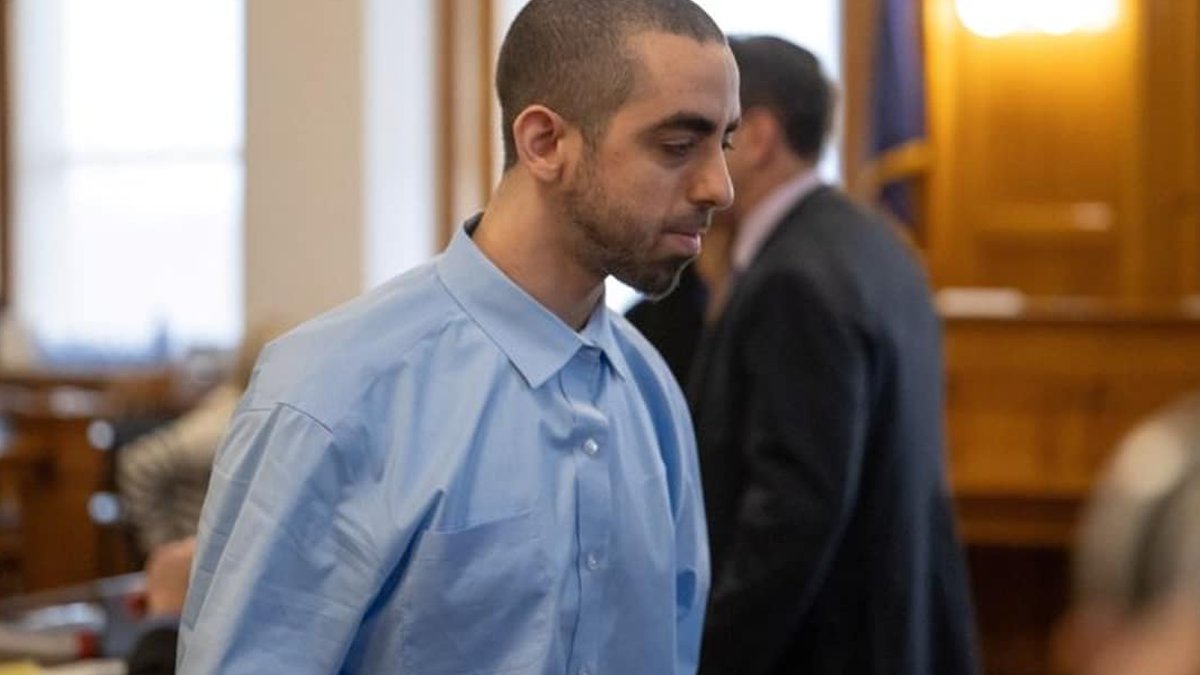
The man who stabbed and partially blinded author Salman Rushdie at a speaking engagement in 2022 was found guilty on Wednesday of federal terrorism charges for the attack, which prosecutors said was incited by death threats over his novel “The Satanic Verses.” The verdict capped a trial that began last Tuesday and included testimony from Rushdie himself, who described the chaos of the moment he was attacked.
Timeline of the Attack and Verdict
Hadi Matar, 28, was found guilty by a U.S. District Court jury in Buffalo, New York, on all counts. The jury deliberated for only two hours before reaching its decision. The federal charges included attempting to provide material support to Lebanon’s Iran-backed militant group Hezbollah, engaging in terrorism transcending national boundaries, and providing material support to terrorists.
Already serving a 25-year prison term from a state court conviction for attempted murder in February 2025, Matar now faces a maximum penalty of life in prison when sentenced on November 3.
Rushdie, 79, was stabbed more than a dozen times in the head, neck, torso, and left hand during the attack at the Chautauqua Institution in Mayville, New York, on August 12, 2022. He lost sight in his right eye and suffered damage to his internal organs. A second man was also wounded, and audience members rushed the stage to subdue the attacker.
Related: Greggs profit up 20% on grocery business growth
The Fatwa and the Motivation
The attack was directly tied to a 1989 religious edict, or fatwa, issued by the late Ayatollah Ruhollah Khomeini, then Iran’s supreme leader. Khomeini denounced Rushdie’s 1988 novel “The Satanic Verses” as blasphemous and called for the author’s death. This led to a multimillion-dollar bounty and years of violence, including the 1991 murder of Rushdie’s Japanese translator, Hitoshi Igarashi.
Although the Iranian government distanced itself from the fatwa in 1998, it was endorsed in 2006 by Hezbollah’s secretary general and reaffirmed in 2017 by Khomeini’s successor, Ali Khamenei. Prosecutors presented evidence at trial suggesting Matar spent more than a year researching the fatwa before traveling to New York to carry out the attack.
Rushdie was born into a Muslim Kashmiri family in India and later obtained British and U.S. citizenship. He spent the first decade of the fatwa in hiding and adopted a higher profile more than two decades ago, moving to New York City. In 2024, he published a memoir detailing his recovery from the stabbing, titled “Knife: Meditations After an Attempted Murder.”


