


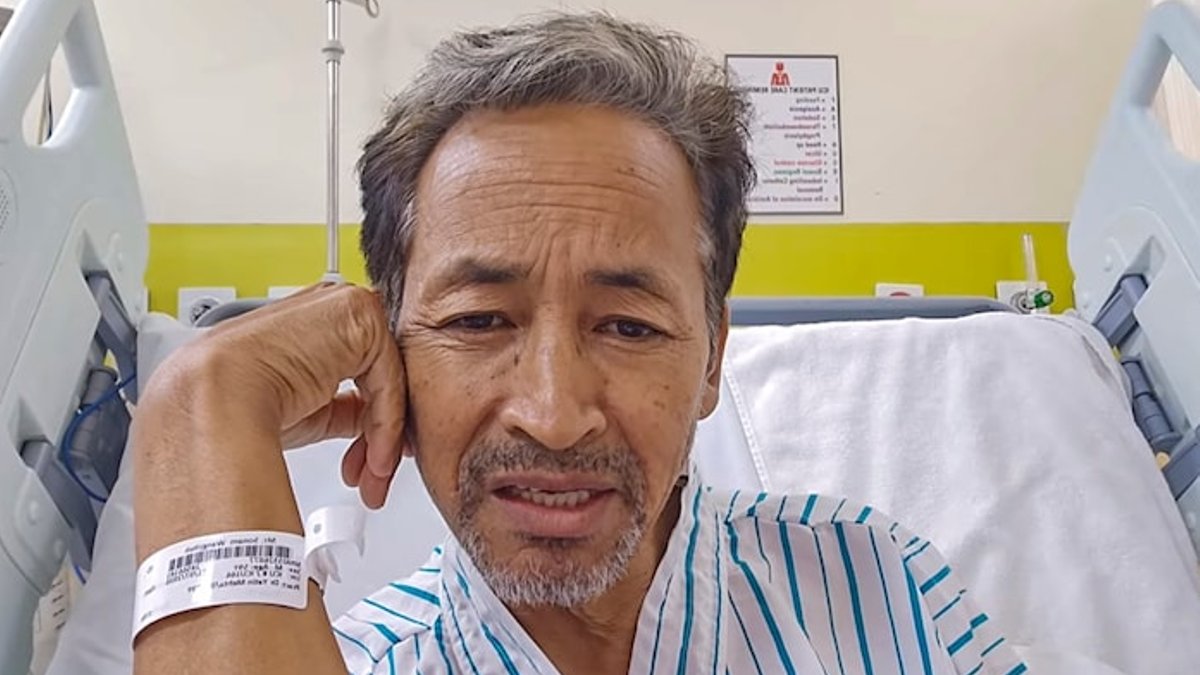
Activist Sonam Wangchuk ended a 26‑day hunger strike after receiving a written assurance from the central government that no legal action would be taken against peaceful protesters, he said in a video posted on YouTube late Friday night.
He ended the fast at midnight.
Negotiations that led to a written guarantee
Wangchuk explained that he agreed to stop his indefinite fast only after Union ministers provided a written promise that authorities would not file cases against demonstrators. He said the assurance came after he was told, “around midnight, the ministers had agreed to give the assurance in writing.” The activist added that he was hurried by “the situation in Delhi” and feared a large‑scale crackdown.
Related: Indo-MIM IPO sees strong demand on second day
He recalled the September 24, 2025 incident in Ladakh, when police and CRPF personnel opened fire on youths, saying the memory of that event made him anxious about a repeat in the capital. “I was watching reports and was reminded of that day,” he said. “I was afraid something similar could happen here.”
Details of the agreement and hospital treatment
According to the activist, Union ministers J P Nadda and Jitendra Singh met him at Medanta Hospital. They agreed to consider compensation for families of students who died by suicide after an alleged NEET paper leak and to hold a parliamentary discussion on accountability and examination reforms. Initially, the ministers offered only verbal assurances, but he insisted on a written document before ending his fast.
The activist also described his treatment after being moved to Safdarjung Hospital on July 18. He claimed he was “treated like a prisoner,” denied free movement, prevented from seeing visitors, and barred from using a mobile phone or laptop. “It was like being in North Korea,” he said, adding that even after the Delhi High Court allowed a transfer to Medanta Hospital, he was allegedly kept at Safdarjung for several hours.
His primary concern throughout the talks was to protect students participating in the protests from violence or legal repercussions. He noted that he did not press for Education Minister Dharmendra Pradhan’s resignation during negotiations, believing the demand would eventually be met through the broader movement.
Related: Understanding Unfair Dismissal Under Employment Law
He also mentioned that he had hoped to end his fast in the presence of members of the Cockroach Janta Party, MPs, and representatives from Ladakh, but many were not allowed to meet him before the ministers arrived late at night. “The biggest sorrow in my heart is that my colleagues, the students and the MPs who had come to support me could not be present when I ended my fast,” he said.
Wangchuk’s decision to end the hunger strike came shortly after midnight on Thursday, following the written assurance that the government would not register cases against peaceful protesters, would discuss examination reforms in Parliament, and was positively considering compensation for families of students who died by suicide after the alleged paper leak.
For the students and families caught in the controversy, the assurance may provide a measure of relief, but the broader issues around examination integrity and student welfare remain unresolved. The promise of parliamentary discussion signals an official acknowledgment, yet the effectiveness of any reforms will depend on how quickly concrete steps are taken and whether they address the root causes of the unrest.


