
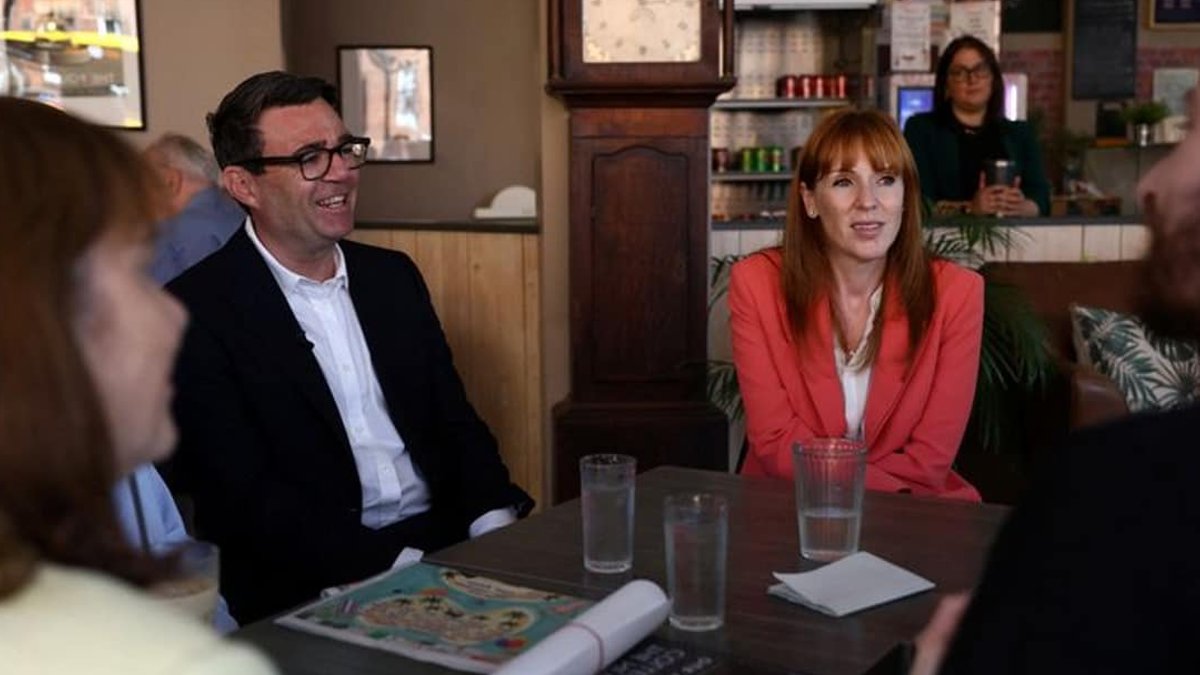
Prime Minister Andy Burnham told listeners of BBC Radio’s “Wake Up to Money” that his administration will pursue measures aimed at lowering costs for businesses, even as it confronts a “difficult financial outlook.” The comments came ahead of a budget slated for October 28, which is expected to feature a broader review of business rates—the levy applied to shops, offices and other commercial premises.
Budget plans focus on business rates and rail fares
Burnham said the upcoming budget will examine how business rates are assessed, signaling a willingness to “go further” on the issue. He emphasized that any changes must be financially sustainable, noting that “I won’t bring forward things that I can’t fully fund.” The prime minister also mentioned a parallel effort to remodel Britain’s rail fare system, aiming to make public transport more affordable.
The budget will be released on October 28.
In addition to these proposals, Burnham reiterated a longer‑term objective of increasing state control over water, energy and housing services. He argues that such structural reforms could ultimately reduce household expenses, creating a more stable environment for both consumers and enterprises.
Related: Poland eyes unused EU defense funds
Recent reforms and public reaction
Since taking office, his government has introduced a series of modest reforms that have resonated with voters. Measures include a crackdown on high‑street vape shops, a cap on bus fares, a reduction in the sales tax applied to electricity bills, and a 20 % cut in business rates for pubs, clubs and live‑music venues. The administration has also targeted misleading product discounts and subscription traps, aiming to protect consumers from predatory pricing.
Opinion polls suggest that these incremental steps have bolstered the prime minister’s standing among the electorate, despite the limited scale of each individual policy. Burnham described the approach as an “accumulation of smaller things,” arguing that the collective impact can ease pressure on household finances and, by extension, on small‑business owners.
He has publicly ruled out tax increases on working people, though he has left open the possibility of other tax hikes to fund reforms in social care. Together with Finance Minister John Healey, they have pledged to adhere to the government’s fiscal rules, a stance that narrows the room for additional borrowing.
One of the more tangible outcomes of the recent policy push is the 20 % business‑rates reduction for venues such as pubs and live‑music clubs. This specific cut was intended to support sectors hit hard by pandemic‑related restrictions and to stimulate local economies. While the relief is modest, it reflects the government’s broader strategy of targeting relief where it can be most immediately felt.
Related: Ceuta Border Rush Claims 100 Lives
From a practical standpoint, these changes could mean lower operating costs for small retailers and service providers that struggle with high overhead. For a neighborhood café, a reduced rates bill may free up cash to invest in staff or to keep prices stable for customers. That kind of ripple effect, though not headline‑grabbing, is the kind of everyday impact Burnham hopes to achieve.
Nonetheless, the prime minister acknowledged that fiscal constraints limit the scope of any new initiatives. “I’m in a position with limited room for manoeuvre,” he said, highlighting the balancing act between fiscal prudence and the desire to ease cost pressures.
Analysts note that the upcoming budget will be closely watched for signals about how the government intends to reconcile these competing priorities. The review of business rates could involve adjustments to valuation methods, relief thresholds or regional differentials, but details remain scarce.
In the meantime, the administration’s focus on incremental reforms and targeted relief reflects a cautious approach to economic stewardship. By avoiding broad‑scale tax hikes and emphasizing specific, measurable cuts, the government aims to maintain public confidence while managing a constrained fiscal environment.


